What is Rett syndrome?



Rett syndrome is neurodevelopmental and not neurodegenerative—brain cells do not become damaged or die, meaning that changes in symptoms may be possible at any age.
Along with a variation in symptoms, the ability to think and understand may also vary among children. Many children with Rett syndrome are cognitively aware but are unable to effectively act on their desire to communicate. This may leave them feeling frustrated and misunderstood.
As varied as these symptoms can be, your loved one can also experience unexpected setbacks called regressions. This may leave you and your family continually seeking new solutions to the ongoing changes in your loved one.
What causes Rett syndrome?
In Rett syndrome, a majority of cases are caused by a change in the MECP2 gene

MECP2 is thought to control how many genes work, including those important for brain development.

Changes in the MECP2 gene are thought to disrupt the activity of the genes associated with the symptoms of Rett syndrome.
MECP2=methyl-CpG-binding protein 2.
What are the symptoms of Rett syndrome?
There are 4 key features of Rett syndrome:

Partial or complete loss of purposeful hand use
As Rett syndrome progresses, a child’s purposeful hand skills may be lost. This can happen suddenly or gradually.

Unusual hand movements
Repetitive hand movements are characteristic of Rett syndrome, and may include wringing, washing, clapping, tapping, or repeatedly putting hands in the mouth.

Partial or complete loss of communication abilities
These regressions can include reduction or loss of babble speech, spoken language, and communication.

Reduced or impaired ability to walk
The inability to perform motor functions, called apraxia, can interfere with many body movements, including walking and crawling.
Additional challenges associated with Rett syndrome:

Irregular breathing patterns

Epileptic seizures

Movement disorders

Behavioral disturbances

Gastrointestinal disorders

Heart issues

Curvature of the spine, hip displacement, and bone fractures
How is Rett syndrome diagnosed?
Diagnosing Rett syndrome involves the careful observation of your child's growth and development.
The diagnosis is usually considered when the doctor observes a slowing of head growth, a loss of skills or developmental milestones, or when a specific set of symptoms arise.
Although not required for a diagnosis, your doctor may order genetic testing. The genetic test looks for MECP2 mutations and can help provide an extra level of information that may be useful in understanding what the diagnosis may entail, as certain mutations often indicate the severity of the disorder.
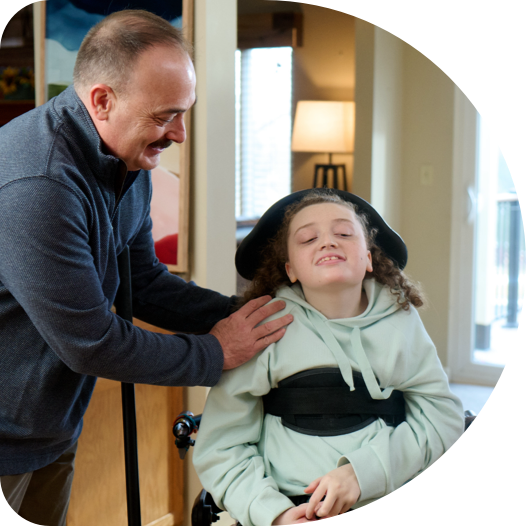
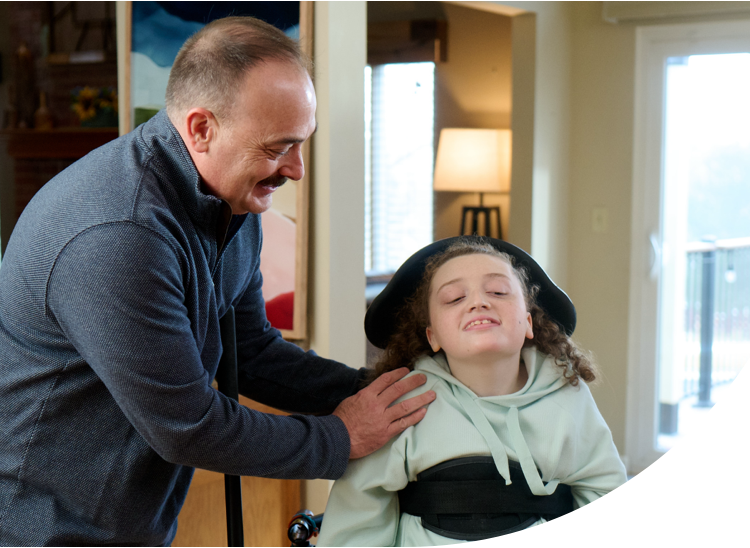
Maddy, age 21, living with Rett syndrome, with her dad
What is a clinical diagnosis?
A clinical diagnosis of Rett syndrome is based on your child’s symptoms and behaviors that your doctor has observed in their office and what you have observed in your child at home.
Maddy, age 21, living with Rett syndrome, with her dad
The signs and symptoms of Rett syndrome: the management is as individual as your child
How is Rett syndrome managed?
A team comprised of a unique selection of doctors, specialists, and specialized therapists is needed to help manage these wide-ranging symptoms. And at home, children with Rett syndrome typically require lifelong care and may need assistance with many aspects of daily life.


Cheryl, Family Support Educator
Want to learn more about Rett syndrome?
Whether your child is newly diagnosed or you have been on a long journey with Rett syndrome, you may have questions. Family Support Educators are here to help answer them.
Cheryl, Family Support Educator
Find a specialist
The Physician Locator Tool can help
you find a Rett syndrome specialist
near you.
Register for updates
Sign up to receive the latest
information about treatment with
DAYBUE and new resources.